Understanding the Parking Area Line Gradient Icon: A Practical Guide for Designers
The Distinctive Nature of Line Gradient Design
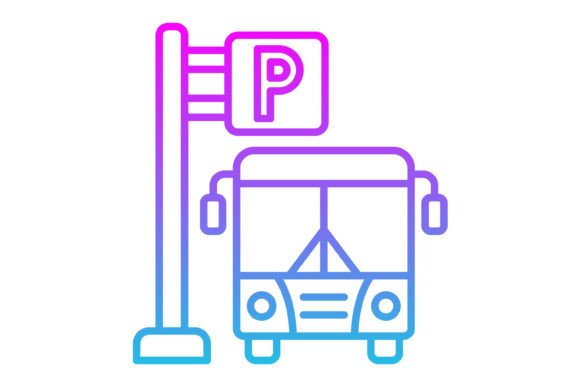
In the crowded field of digital assets, the Parking Area Line Gradient Icon occupies a specific niche that balances modern aesthetics with functional clarity. Unlike standard solid-color icons, this style utilizes a subtle gradient transition within the line work. This approach adds depth and dimension without the visual heaviness of filled or 3D icons. For designers and developers working on contemporary interfaces, this distinction is crucial. The gradient effect suggests a light source or a material quality, making the icon feel more "alive" and integrated into modern UI kits that favor depth and layering over flat minimalism.
When evaluating this style, it is helpful to compare it against two common alternatives: flat line icons and solid filled icons. Flat line icons offer maximum simplicity and are easy to implement, but they can sometimes appear sterile or generic in premium applications. Solid filled icons provide high contrast and visibility, yet they can dominate a layout if not carefully balanced. The Parking Area Line Gradient Icon sits between these two. It retains the structural simplicity of a line icon—ensuring it remains recognizable at small sizes—but uses the gradient to create a focal point that draws the eye. This makes it particularly suitable for hero sections on websites, app splash screens, or presentation slides where visual engagement is a priority.
Technical Specifications and Versatility
A significant factor in choosing any digital asset is its technical compatibility. The package containing the Parking Area Line Gradient Icon addresses common format anxiety by including five distinct file types: AI, EPS, JPG, PNG, and SVG. This range is designed to cover virtually any workflow requirement, from legacy desktop publishing to modern web development.
- Vector Formats (AI, EPS, SVG): These are the workhorses for scalability. The AI and EPS files are essential for designers using Adobe Illustrator or similar vector editing software. They allow for complete customization of the gradient stops, line weights, and colors. The SVG (Scalable Vector Graphics) format is the industry standard for web implementation. It ensures the Parking Area Line Gradient Icon renders crisply on any screen resolution, from standard HD to 4K and Retina displays, without increasing file size significantly.
- Raster Formats (JPG, PNG): The inclusion of a PNG with a transparent background is particularly valuable for web and mobile app developers. It allows the icon to be placed over complex backgrounds or images without a white box surrounding it. The JPG format serves as a fallback for contexts where transparency is not required or file size constraints are rigid, though for an icon with gradient transparency, the PNG or SVG is almost always preferred.
The claim that this icon is "ready to use for all devices and platforms" is largely accurate, provided the user selects the correct format. For mobile app development, the SVG or high-resolution PNG is recommended to ensure the icon scales correctly across different device densities. For print presentations, the vector formats (AI or EPS) are superior as they can be scaled to any size, from a business card to a billboard, without pixelation.
Evaluating Fit: When to Choose This Icon
Determining if the Parking Area Line Gradient Icon is the right choice depends on the specific project context and the existing design language. This icon is an excellent fit for:
- Modern Mobile Applications: Apps that utilize a "glassmorphism" or soft-shadow UI style often pair well with gradient line icons. The subtle color shift can complement the translucent, layered look of modern iOS and Android interfaces.
- Corporate and Premium Websites: For websites in the automotive, real estate, or urban planning sectors, a gradient line icon conveys professionalism and attention to detail. It suggests that the brand invests in quality visual assets.
- Information-Rich Dashboards: In data visualization or management dashboards, icons serve as quick visual cues. The gradient helps the Parking Area Line Gradient Icon stand out slightly from the background noise of charts and tables without being distracting.
However, there are scenarios where this specific style may not be the optimal choice. If a project mandates a strict, ultra-flat design system (like the original Material Design guidelines), a gradient icon might clash with the surrounding elements. In very dense interfaces where icons are rendered at extremely small sizes (e.g., 16x16 pixels), the gradient effect may become imperceptible or muddy, making a simple solid icon a more functional choice. Additionally, if the project requires heavy animation, a complex gradient can sometimes be more resource-intensive to animate smoothly compared to a simple shape change, though this is rarely an issue with modern hardware.
Comparison with Alternative Approaches
When sourcing assets like the Parking Area Line Gradient Icon, creators often weigh custom creation against pre-made packs. Hiring a designer to create a bespoke icon ensures perfect alignment with brand guidelines, but it is cost-prohibitive for many projects. Pre-made packs, such as the one described here containing 100 vector icons, offer a middle ground. They provide a cohesive visual language across a set of icons—meaning the parking icon will match the "entrance," "exit," and "payment" icons—saving significant time in sourcing and adjusting mismatched assets.
Furthermore, the "easy to edit and scale" feature is a practical advantage. Because the file formats included are standard, a designer can open the vector file and adjust the gradient colors to match a specific brand palette in minutes. This adaptability is a key decision factor. A rigid icon that cannot be recolored is often useless in a professional setting. The ability to scale the Parking Area Line Gradient Icon also means it can be repurposed across different marketing materials, from a small favicon to a large event banner, maintaining consistency.
Practical Considerations for Implementation
For developers and designers integrating the Parking Area Line Gradient Icon, a few practical steps ensure the best result. First, always test the icon against the primary background colors of your project. Gradients can sometimes interact unexpectedly with certain background hues, potentially reducing contrast. Second, consider the accessibility implications. Ensure that the color contrast ratio between the icon and its background meets WCAG (Web Content Accessibility Guidelines) standards, especially for users with visual impairments. Sometimes, adjusting the gradient's lightness or darkness is necessary to achieve compliance.
Finally, when using the SVG format on the web, optimize the file. While vector files are efficient, they can contain unnecessary metadata. Running the SVG through an optimization tool will reduce file size, contributing to faster page load times—a critical factor for both user experience and search engine ranking.
In conclusion, the Parking Area Line Gradient Icon